Red deer in Scotland: why did we choose this destination?
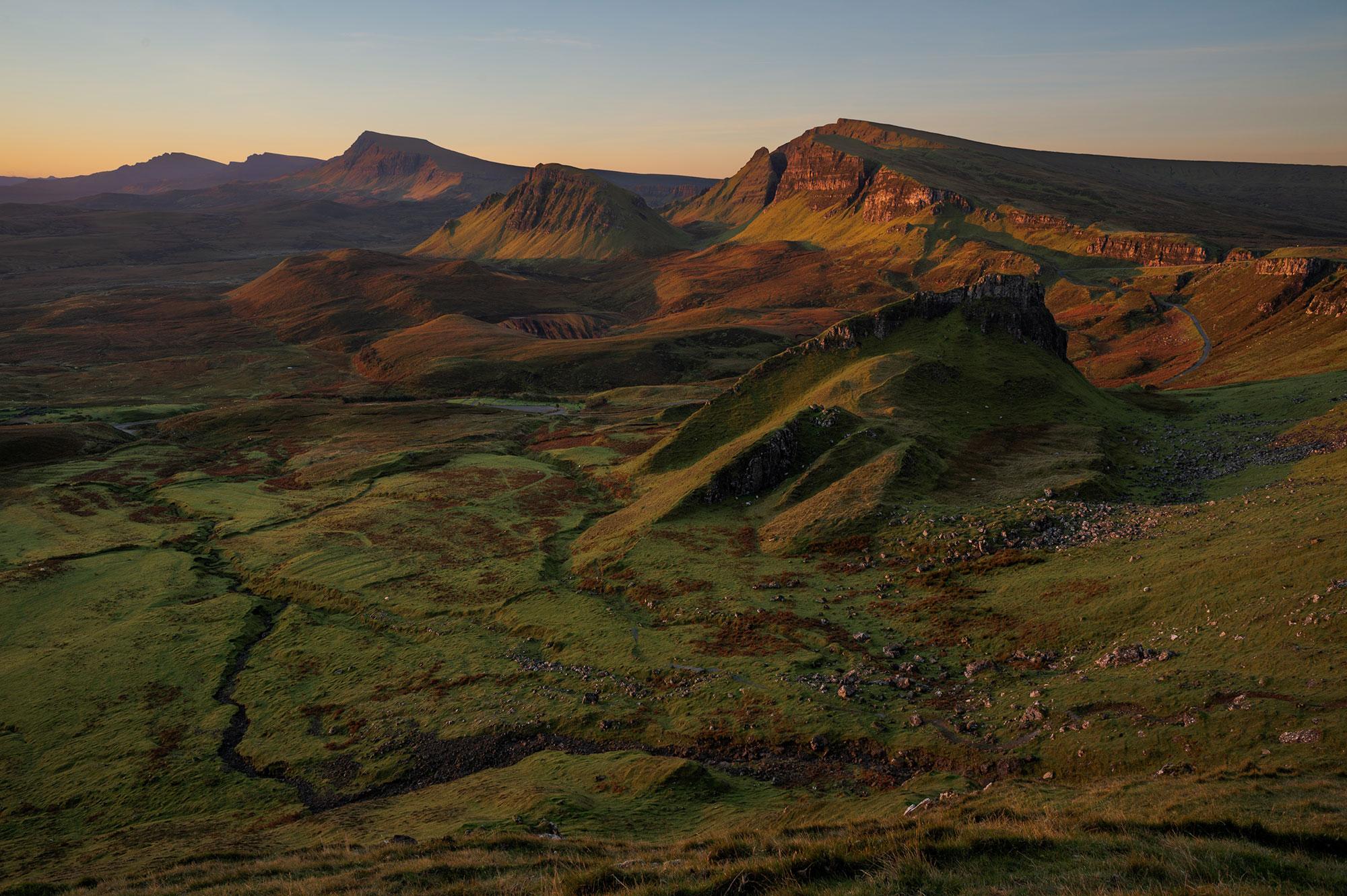
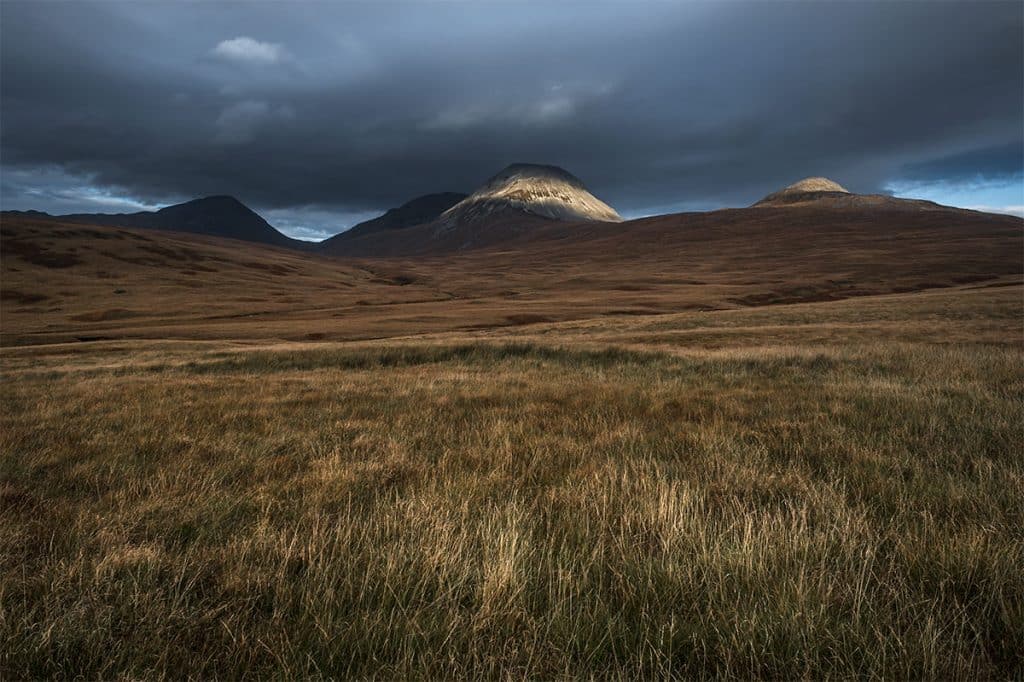
Scotland is one of the top destinations for wildlife and nature photographers. The country is known for its dramatic landscapes, windswept moors, mysterious mountains, and coastline rich in seabirds and marine mammals. But few people talk about red deer in Scotland. Yet for anyone accustomed to photographing red deer in forest environments in Europe, Scotland offers a variety of very interesting landscapes. Mountains, moors, shorelines… If you are a wildlife photographer, you will be amazed to see the different ecosystems where it is possible to photograph red deer in Scotland! This is the subject of our article today.
The red deer on the islands of Scotland
In Scotland, red deer were imported from Europe for hunting and introduced to certain islands. In order to survive, they had to evolve and adapt to this new environment, especially since they had no way of returning to the ecosystems they had previously inhabited. When we first arrived in Scotland, we were amazed to see these animals living in such an environment. We were transfixed by what we saw and fell in love with these incredible scenes: red deer on the islands.
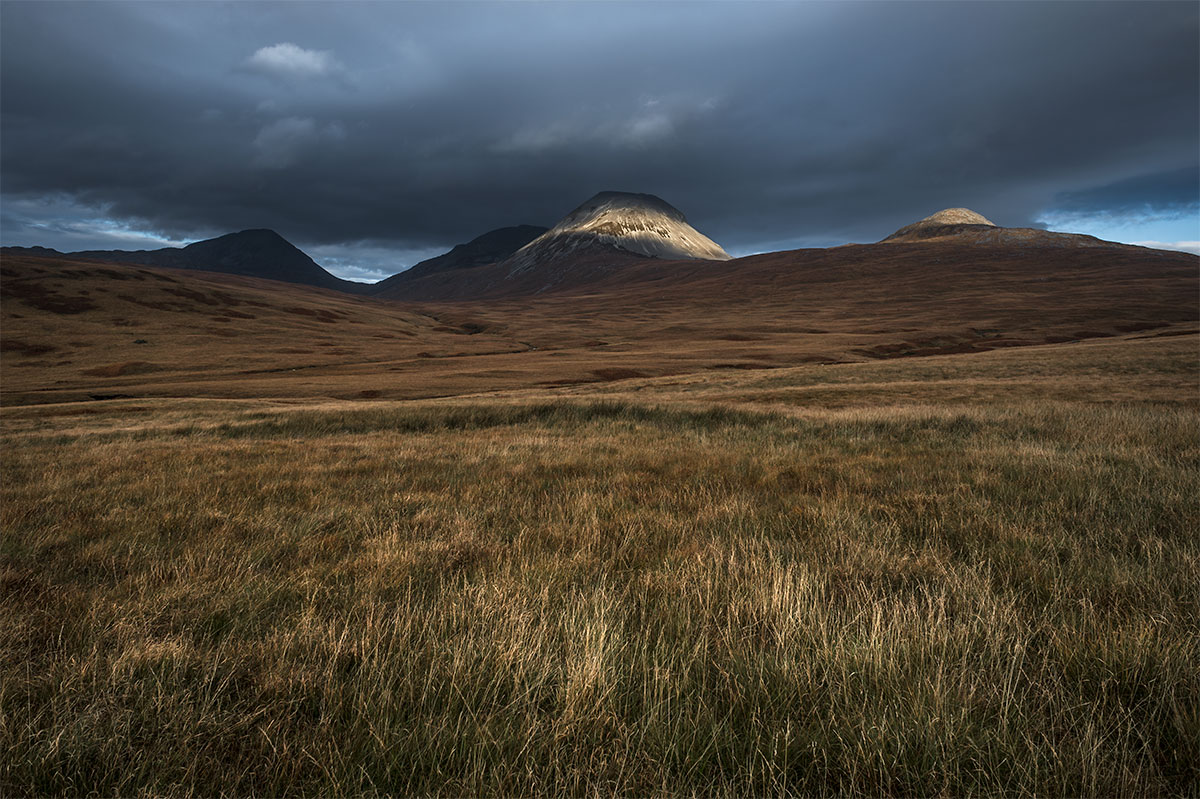
The deer also shaped these islands, which were once wooded. Little by little, they transformed them into open environments, moors, very similar to the tundra, which is a biome found in cold climates. As a reminder, deer are particularly fond of buds and young tree shoots, which can slow down or even prevent forest regeneration in the absence of predators such as wolves. Unfortunately, this is what has happened on some of the Inner Hebrides islands.
Red deer in the Scottish Highlands
The Scottish Highlands, what a legendary place!
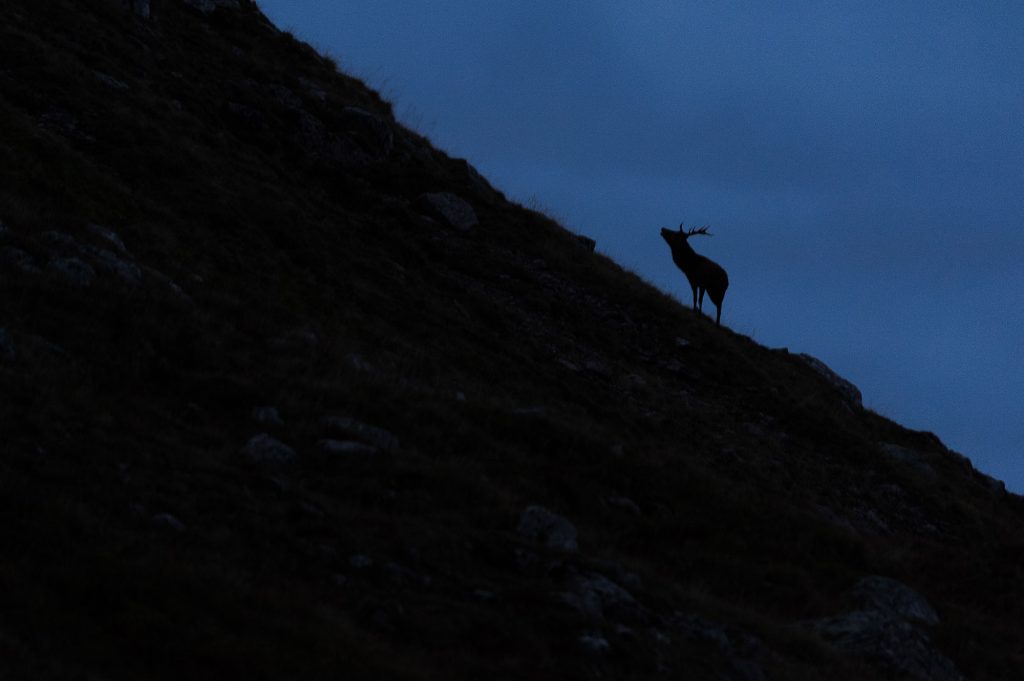
Rich in history, legends, and breathtaking landscapes, the Highlands are the north-western part of Scotland. The mountainous parts of the highlands and the coast are definitely worth a visit. There is a wide variety of wildlife, including European otters, mountain hares, and European wildcats. But red deer reign supreme here.
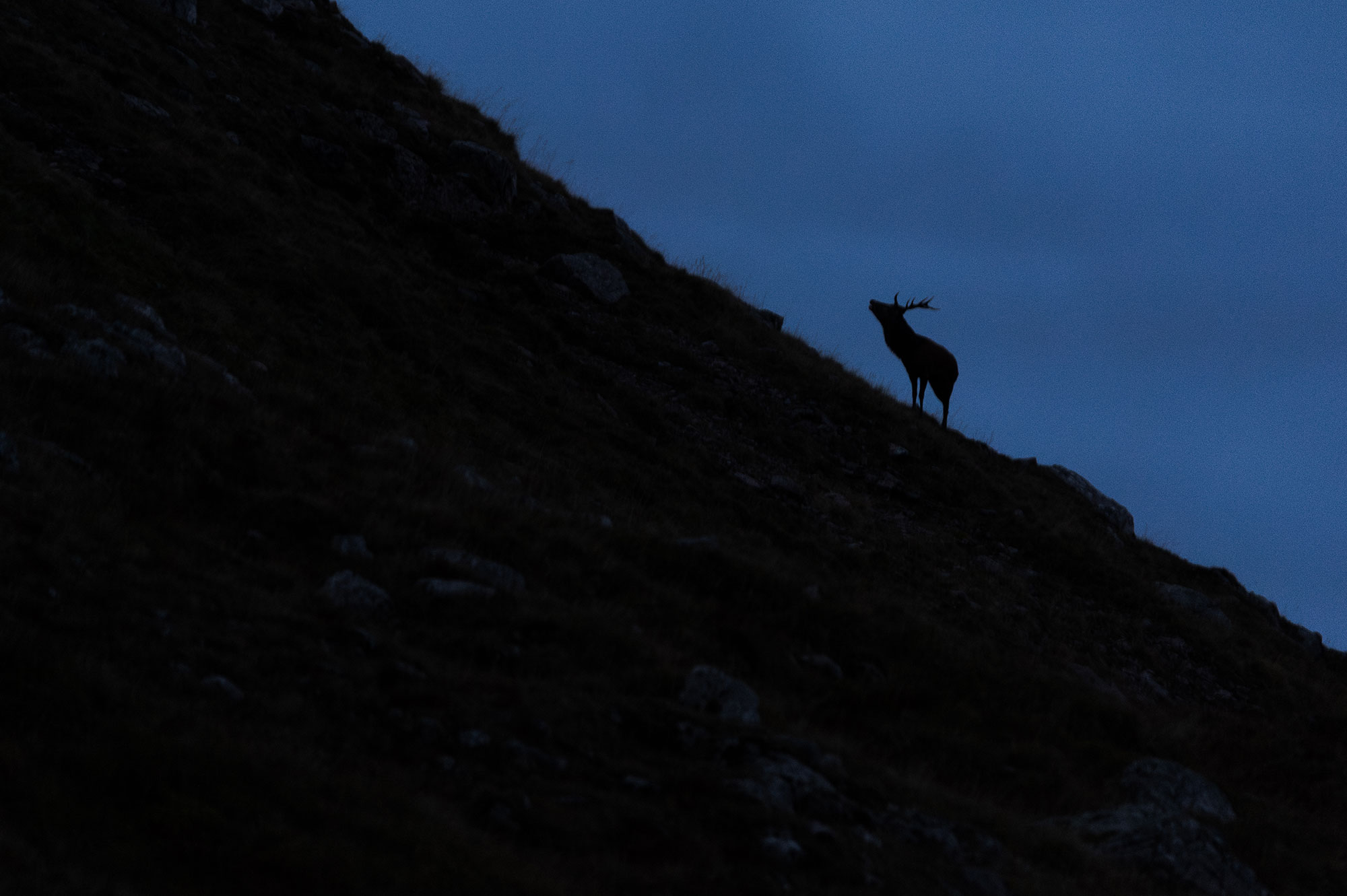
During October, the roar of the deer echoes through the mountains. It is a private concert and a unique experience for nature lovers. What a privilege it is to observe these red deer living in an environment of rock and alpine semi-tundra. We accompany wildlife photographers to the Highlands to photograph red deer at the top of the mountains. The images are strikingly reminiscent of those of ibex in the French and Swiss Alps.
However, although our red deer photography tour takes place on the Inner Hebrides, we prefer the Highlands for our private photography tours because such a tour requires more flexibility. Please do not hesitate to contact us if you have any questions on this subject.
Red deer in Scotland
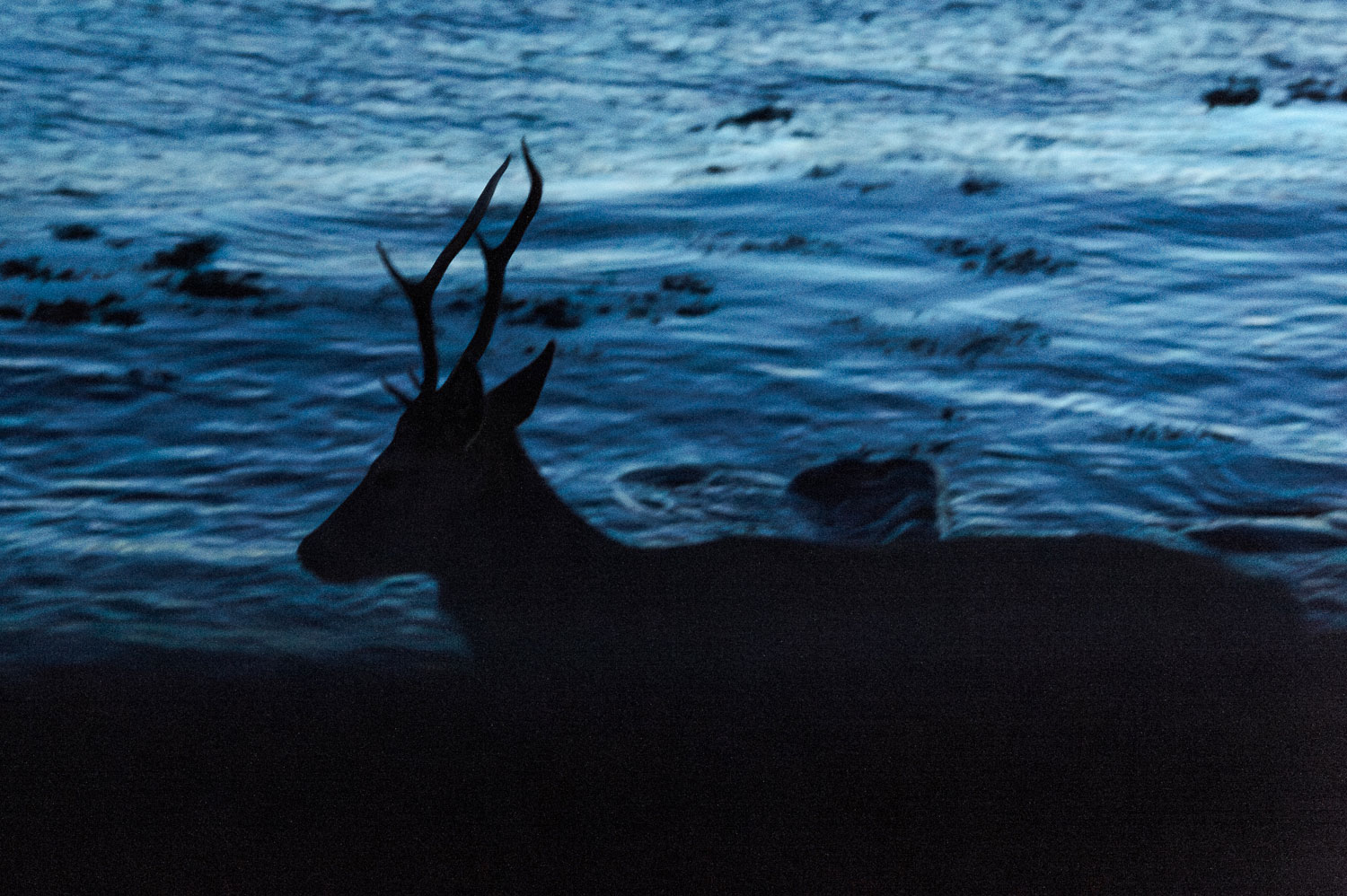
Did you say deer on the shores?
It is very interesting to note that for two of our photography tours, namely the red deer in Scotland and the Arctic fox in Iceland, we observe a similar situation: these mammals turn to the ocean for survival!
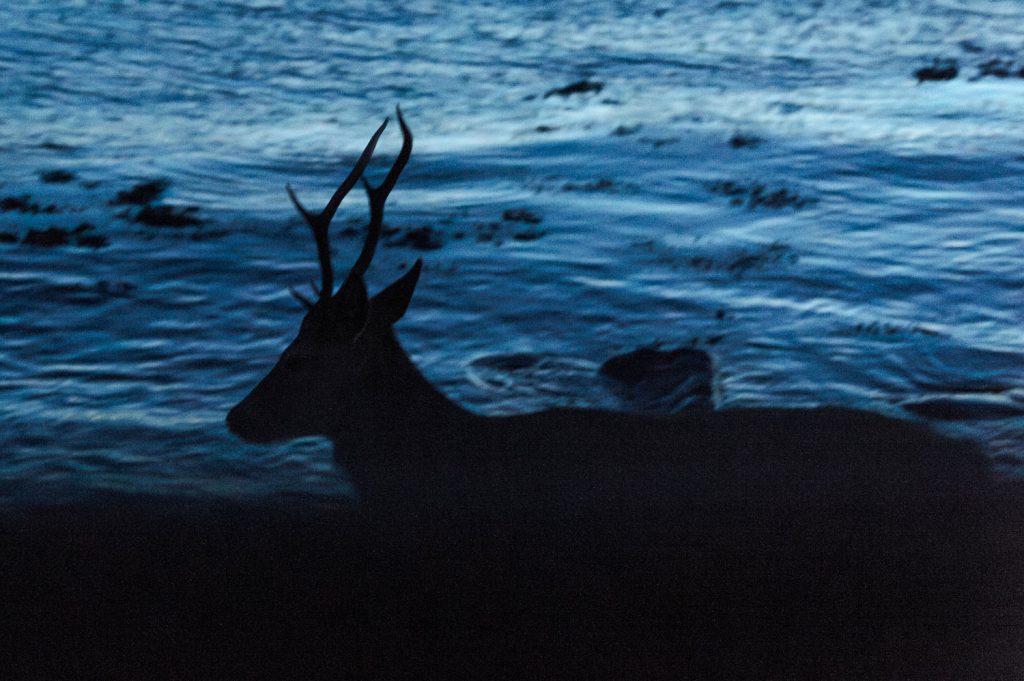
Whenever we talk about Scottish deer wandering along the shores to feed, wildlife photographers look at us with wide eyes. Indeed, it is hard to believe that these inhabitants of the great European forests feed in and around the ocean. It is important to note that the soil on the Scottish islands is very poor. It contains few nutrients and few mineral salts. The deer are therefore forced to find these nutrients elsewhere. And it is on the shores, where seaweed, kelp and other plants washed up by the ocean, that they find these nutrients.
We must not forget that in the history of evolution, land mammals have become marine mammals (eg, whales and seals), and vice versa (hippopotamuses, for example). When we see this type of adaptation, we cannot help but think that one day, perhaps, these deer will become inhabitants of the oceans.
We devote part of our red deer photography course in Scotland to observing and photographing these behaviours. In some places, dozens of stags and hinds come down to the shore at the end of the day to feed. The phenomenon is as impressive as it is unusual.
The red deer on the islands of Scotland
The deer rut, a tradition among wildlife photographers
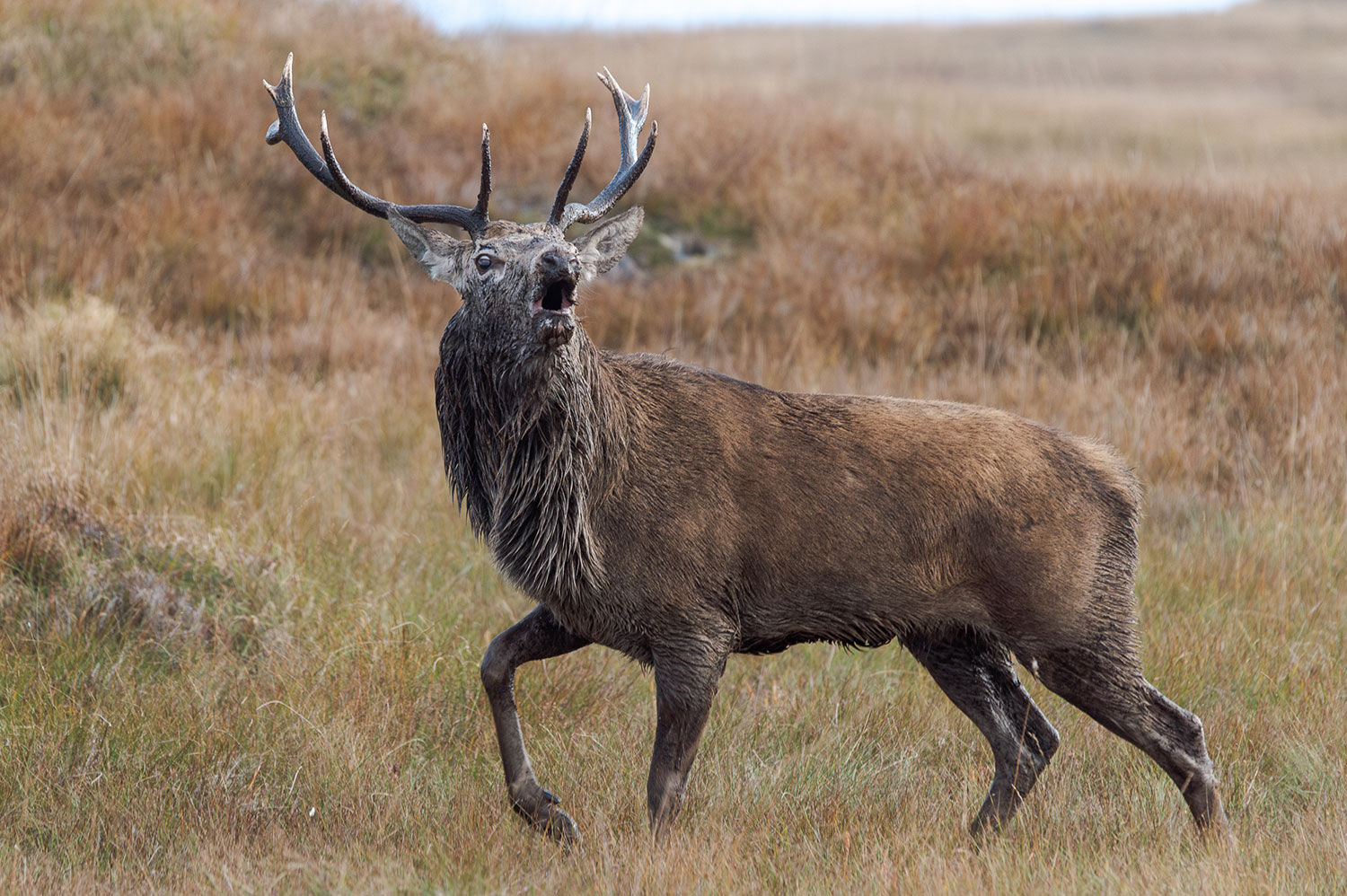
Over the years, the deer rut has become a tradition and a real passion for many wildlife photographers and nature lovers. When October arrives, many of you head to the woods for the chance to observe or photograph the king of the forest.
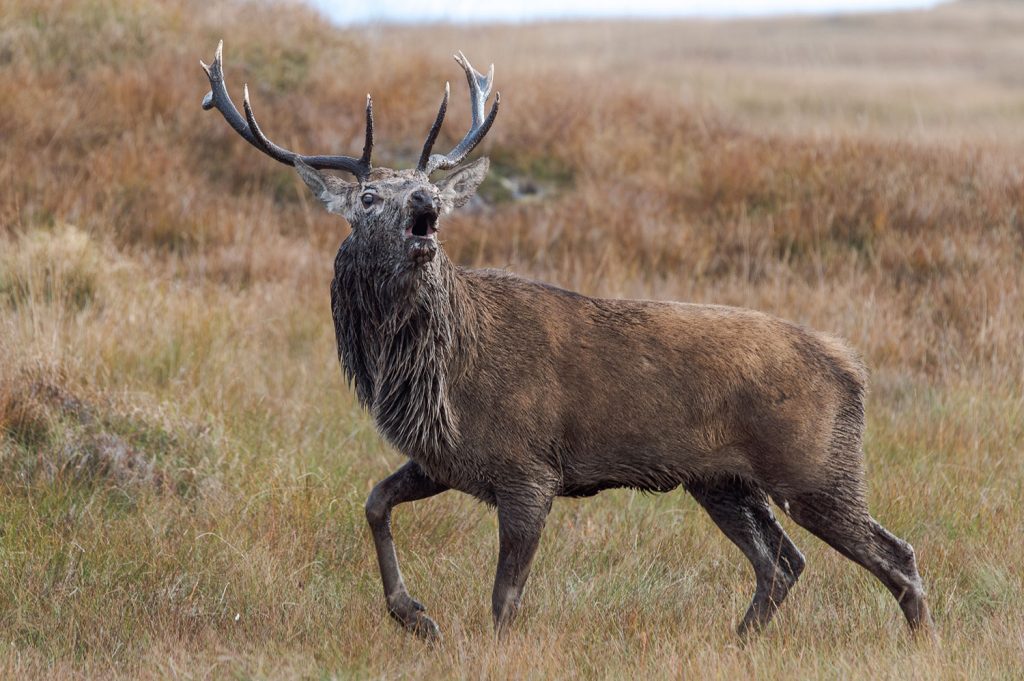
In Scotland, the deer rut lasts a little longer than in Europe. This is because very few climatic events (such as late heat waves) or human activities (such as hunting) interfere with the mating season of Scottish red deer. This makes it an ideal region for observation and photography.
Our photography tour in Scotland takes place on an island that is home to more than 6,000 deer. This means that the chances of seeing them are very high. The same is true for fighting scenes, with higher chances than on the continent.
During our photography workshops, we focus on red deer at dawn and in the morning, then at the end of the day until nightfall. We take advantage of the free time in the early afternoon to look for other species, such as the European otter, which is also present.
Finally, given the sensitivity of deer to disturbance during the rutting season, we limit the amount of time each photographer spends close to a subject. The aim is, of course, to limit our impact and act responsibly.
Deer rut in Scotland
Our vision of wildlife photography
We have noticed a classic mistake that many wildlife photographers make: wanting to get as close as possible to the animals. However, taking a portrait of an animal is far from being the only photographic possibility, far from it. Limiting yourself to this type of photography is an artistic constraint. We love photography because it allows us to tell stories, document events, and create works that provoke emotions. To achieve these goals, we often need to take a step back, observe for longer, and, above all, take into account the environment of our subject.
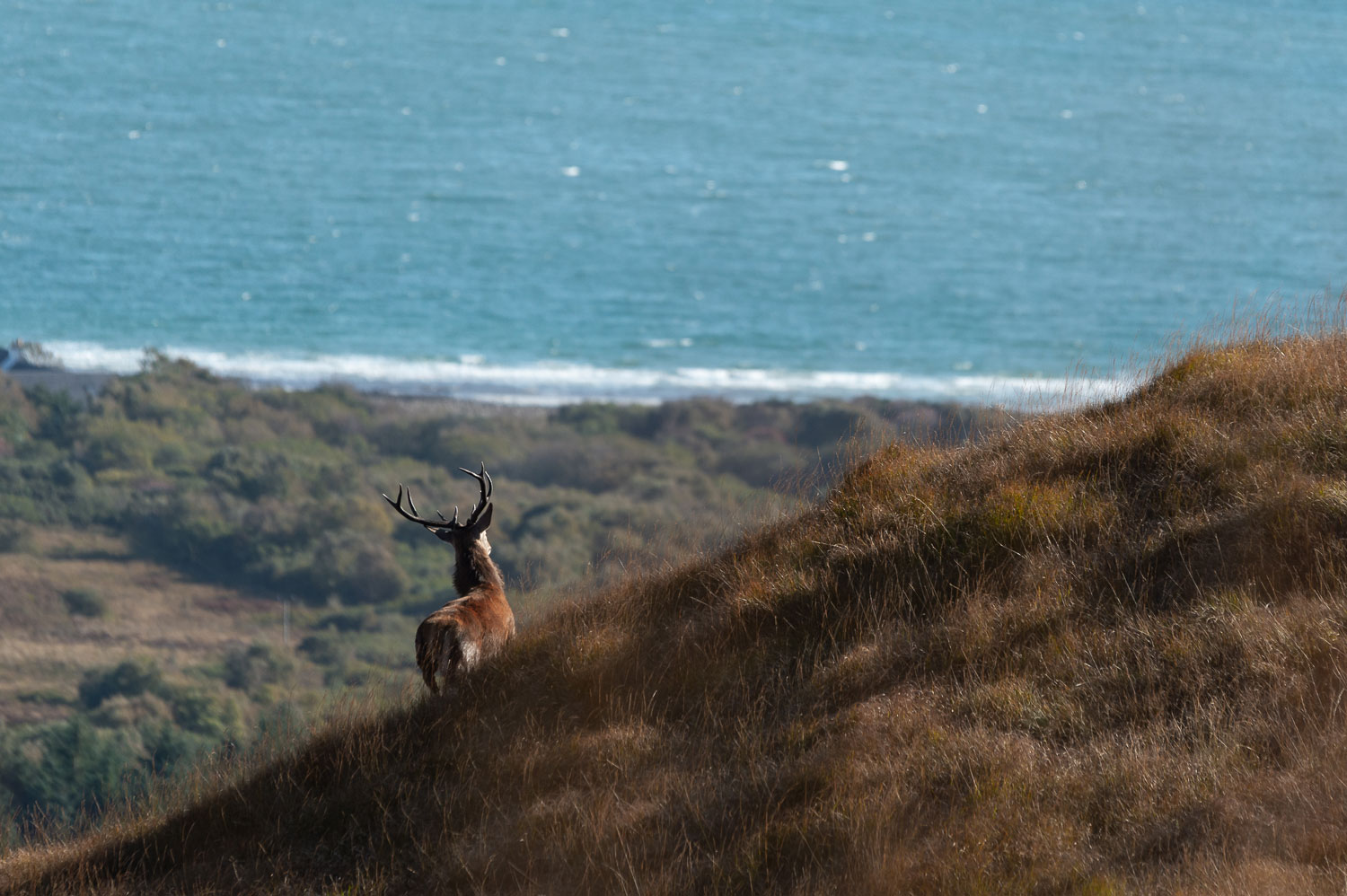
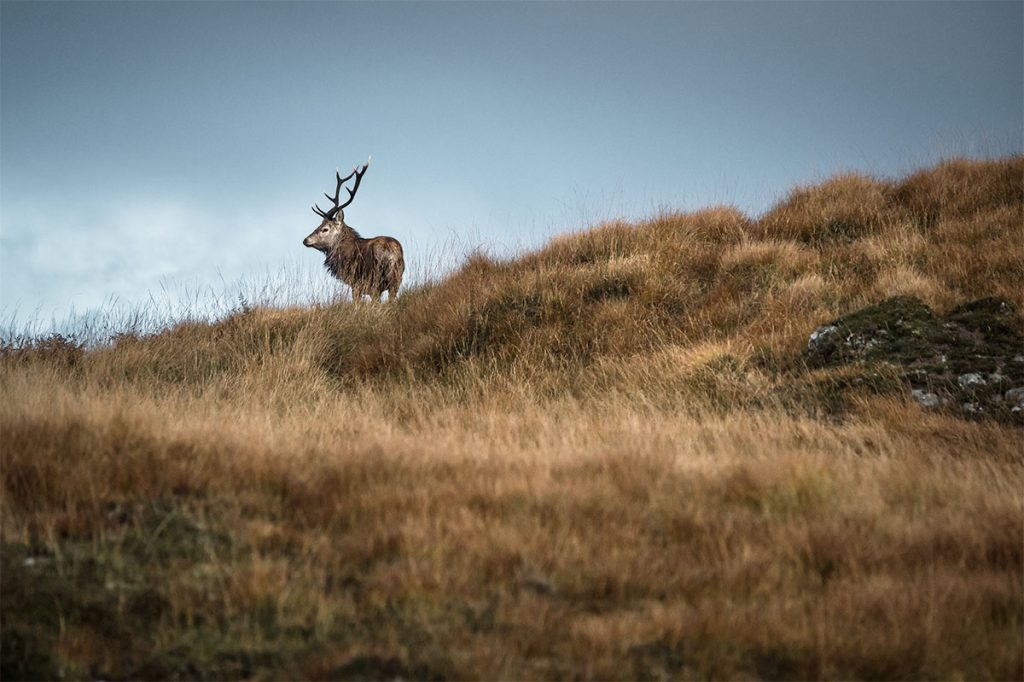
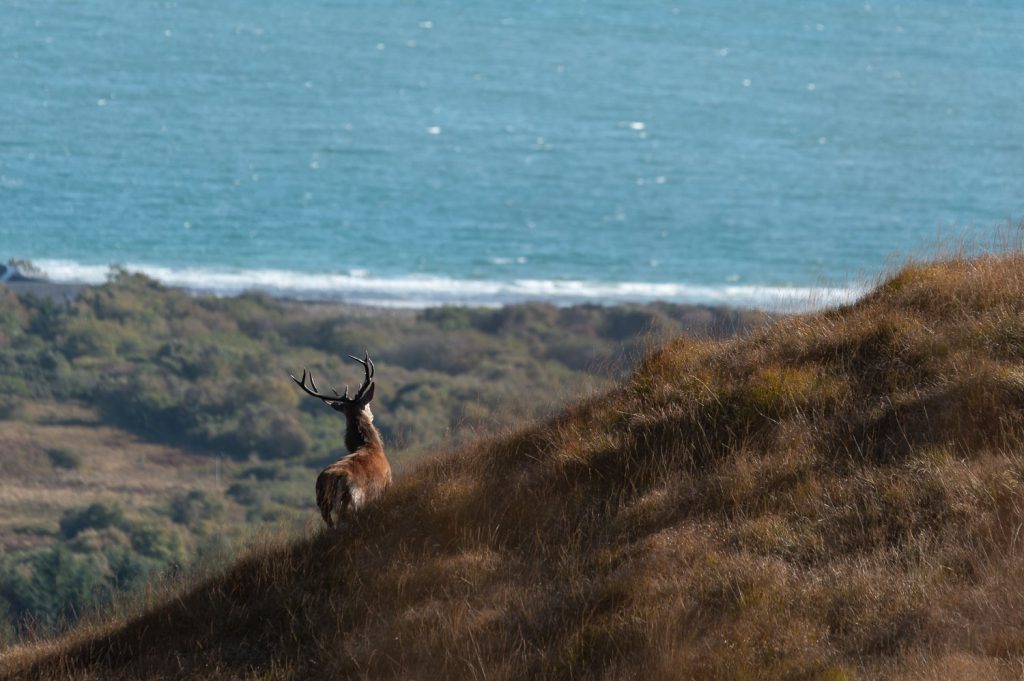
When it comes to red deer in Scotland, the environment is paramount, as the landscapes are a call to creativity. We chose to organise our photography trip to Scotland on an island precisely because of the diversity of these landscapes and the uniqueness of these deer that live by the ocean. This choice allows us to offer wildlife photographers unique opportunities: during our workshops, it is possible to make several daily observations in good conditions for photography, in varied environments such as the Scottish moors, forests, and shorelines.
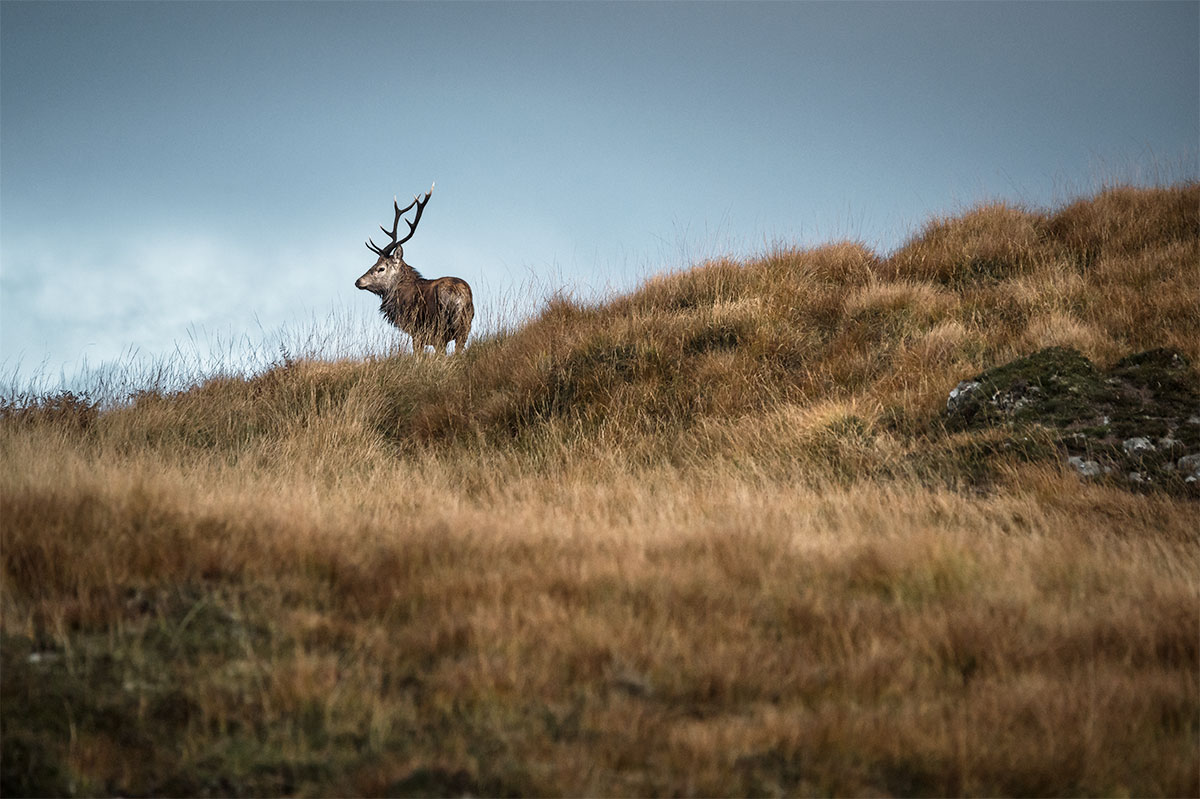
During our photography tours, we therefore advise photographers to keep the necessary distance to include the landscapes in their compositions. They can take a few portraits, but we then invite them to tell the story of an island deer living on the edge of Europe, on the shores of the North Atlantic!
Scottish red deer in their natural environment
The ideal equipment for photographing deer in Scotland
Depending on the destination, we advise photographers to be pragmatic and adapt their photographic equipment. In the case of red deer in Scotland, several problems arise:
Open landscapes require greater mobility and a discreet approach.
The Scottish weather is known to be variable and unpredictable.
The terrain can sometimes be rough, rocky, or boggy.
To adapt to these issues, we need to adapt both our photographic equipment and our clothing.
Wildlife photography equipment for Scotland
For a wildlife photographer, being mobile means above all being light. And when it comes to equipment, it’s clear that fixed telephoto lenses are the heaviest and most cumbersome. To photograph red deer in Scotland, we therefore recommend using shorter focal lengths, such as zoom lenses (150-600mm Tamron, for example), even if this means sacrificing a little quality. A lighter focal length also allows you to use a lighter and smaller tripod. Ultimately, you end up with equipment that you can easily move around the moors if necessary.
The other issue is the weather and bad conditions. Even though we love spectacular sunrises and the misty atmosphere of Scotland, sometimes nature offers us nothing but rain. And if we want to take advantage of this weather and photograph deer in the rain, we need to protect our equipment. The ideal solution is still to have a weatherproof camera body, which is naturally protected against moisture. But in any case, a protective cover for the camera and lens can be useful.
Finally, a waterproof camera bag is essential to protect batteries, memory cards, and other small equipment.
What to wear for a photography trip to Scotland
We always help photographers prepare for their photography trip to Scotland. We offer advice and recommendations on what clothing and equipment to bring. As a general rule, we advise against wearing cotton clothing. Once wet, cotton takes a long time to dry, which makes you feel even colder. We recommend choosing materials such as wool and fleece instead. These two warm materials can be worn in layers, which can be added or removed depending on the temperature. Once you are properly insulated, finish with a waterproof layer (rain jacket and trousers) to stay dry.
The same applies to footwear: a pair of waterproof shoes is ideal. Category B/C hiking boots, which are sturdy and waterproof, serve two purposes: keeping your feet dry and protecting your ankles on rough terrain.
Finally, to stay warm, you need to protect your extremities. Merino wool is ideal for this. A hat, neck warmer, socks, and gloves, all made of merino wool, will keep you comfortable whatever the weather. For your hands, it can be useful to have a pair of waterproof gloves. We often recommend Verjari waterproof gloves. These gloves are not warm, but simply keeping your hands dry is often more effective than wearing wet wool gloves. Especially since temperatures in Scotland in October range from 8°C to 15°C, which is quite reasonable.

Sorry, the comment form is closed at this time.